Chronic pain affects millions of Australians and can significantly impact daily life, sleep, mood, and overall well-being. Unlike acute pain, which is usually linked to tissue injury and resolves with healing, chronic pain persists beyond normal healing time.
Let’s explore how osteopathy approaches chronic pain and why it can be an effective part of long-term management.
What is chronic pain?
Chronic pain is defined as persistent or long-lasting pain that continues past three months. It is a complex, common and challenging condition. While it most commonly stems after injury, illness, or surgery, in some cases, it can develop without a clear cause.
While chronic pain is a common presentation in osteopathy, it is one that challenges both the distinction between body and mind, along with the goal of treatment.
It’s important to know that chronic pain is not “just in your head”. It is a real, measurable condition involving changes in the nervous system, immune system, and brain processing.
Over time, the nervous system can become sensitised.
This means:
- Pain signals are amplified.
- The body becomes more protective.
- Normal movement may start to feel threatening.
Osteopathic principles
Chronic pain management is individualised. There is no “one size fits all” protocol. Treatment is based on the osteopathic principles, which align well with the treatment and management of chronic pain.
- The Body is a Unit.
Chronic pain rarely exists in isolation. Poor sleep, stress, reduced movement, and fear of activity can all contribute. Osteopaths consider the whole person, not just the painful area.
- Structure and Function are Interrelated
Restricted movement, deconditioning, or protective postures can perpetuate pain. Restoring functional movement is key.
- The Body Has Self-Healing Mechanisms
While chronic pain involves sensitisation, the nervous system is adaptable. With appropriate input-movement, education, and reassurance, it can become less sensitive over time.
How does Osteopathy approach chronic pain?
Osteopathy does not simply treat the site of pain. Instead, it considers the nervous system, movement patterns, lifestyle and stress, sleep and recovery, as well as emotional wellbeing.
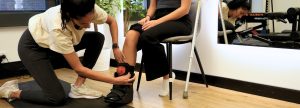
Osteopaths use a combination of passive and active techniques to manage chronic pain. Passive techniques include gentle joint mobilisation, soft tissue work, myofascial release, and, when appropriate, manipulation. These approaches can help reduce protective muscle guarding, improve mobility, provide short-term pain relief, and calm the nervous system. In addition to hands-on methods, active techniques are a key part of chronic pain management. These may involve graded exercise rehabilitation, strengthening programs, mobility work, and breathwork or pacing strategies. Active care is particularly important in chronic pain because movement helps retrain the nervous system, rebuild confidence in the body, and support long-term functional improvement.
Evidence-Based Practice
What the research shows
Chronic pain is complex, and managing it effectively requires more than just treating the area that hurts. Osteopathy takes an evidence-based approach, combining research evidence, clinical expertise, and patient preferences; the three pillars of Evidence-Based Practice (EBP).
It has been found through systematic reviews and meta-analyses that osteopathic manual treatment (OMT) has the potential to reduce pain and improve function significantly for people with chronic lower back pain. One review reported that patients who received OMT experienced meaningful improvements in both pain levels and daily functioning compared to those who did not receive treatment.
Randomised controlled trials also support OMT for chronic neck pain, showing reductions in pain severity and disability, and improvements in sleep, fatigue, and mood. These studies suggest that manual therapy is most effective as part of a multimodal approach, where hands-on treatment is combined with movement-based rehabilitation and patient education. Osteopathy is not a quick fix, but research shows it can be an important part of a long-term strategy for chronic pain management, particularly for low back and neck pain.
Clinical Expertise & Patient Preferences
We know that each patient’s pain experience is unique and evidence alone isn’t enough without clinical expertise. Your osteopath will use their skills to:
- Assess movement patterns and restrictions
- Identify protective tension in muscles and joints
- Tailor treatment intensity and techniques
- Support patients in gradually increasing activity
During chronic pain, the patient’s nervous system can become overly sensitive, and movement may feel threatening, so creating a personalised treatment and management plan is essential.
This personalised plan takes into consideration the patient’s preferences. Some may prefer hands-on techniques; others may prefer exercises or movement-based strategies. Osteopaths collaborate with patients to respect their comfort levels and goals, ensuring that the plan is safe, effective, and sustainable. Treatment outcomes are better for patients who are active participants in their healing journey.
Conditions Where Osteopathy May Help Chronic Pain
Chronic pain can affect many areas of the body, and osteopathy offers tailored approaches depending on the location and underlying factors. While research supports osteopathic care, particularly for back and neck pain, clinical expertise also guides treatment for other chronic pain conditions.
Low back pain
Chronic low back pain is one of the most common reasons people seek osteopathic care. Studies published in BMJ Open and other journals indicate that osteopathic treatment, including spinal mobilisation and soft tissue techniques, can reduce pain and improve function.
A 2020 systematic review found that OMT significantly improved pain and disability in patients with chronic low back pain, particularly when combined with exercise and patient education. Osteopaths focus not only on the spine but also on surrounding tissues and movement patterns to support long-term recovery.
Neck pain
Persistent neck pain is often linked to poor posture, stress, or prolonged sitting. Evidence suggests that joint mobilisation, soft tissue massage, and muscle energy techniques can help improve range of motion and reduce discomfort in the short term.
Osteopaths may also address contributing factors such as shoulder tension, upper back stiffness, and ergonomic issues. Combining hands-on treatment with active exercises empowers patients to regain strength and reduce the risk of recurring pain.
Headaches & migraine
Some chronic headaches, especially tension-type and cervicogenic headaches, are related to neck and upper back musculoskeletal dysfunction. Gentle osteopathic techniques, including soft tissue release and mobilisation, may help reduce tension, improve posture, and decrease headache frequency.
While research specifically on migraine is limited, clinical experience shows that patients can benefit from a combination of hands-on treatment, posture correction, and self-management strategies.
Osteoarthritis & joint pain
Chronic pain from osteoarthritis or long-standing joint conditions can make movement difficult and impact quality of life. Osteopaths use joint mobilisation, soft tissue work, and guided exercise programs to improve mobility, reduce stiffness, and support functional movement.
Even though evidence is stronger for symptom relief than disease modification, improving joint function and maintaining activity levels can significantly enhance daily life.
Conclusion
Chronic pain is complex, multifactorial, and deeply personal. It extends beyond tissues and structures, involving the nervous system, movement patterns, lifestyle factors, and emotional well-being.
Osteopathy aligns closely with modern pain science by recognising the interconnectedness of the body, supporting self-healing mechanisms, and combining hands-on care with active rehabilitation. Evidence suggests that osteopathic manual treatment can help reduce pain and improve function, particularly for chronic low back and neck pain, especially when integrated with exercise and education.
Importantly, successful chronic pain management relies on collaboration. By combining research evidence, clinical expertise, and patient preferences, osteopathy aims to empower individuals to move with greater confidence, reduce sensitivity within the nervous system, and gradually return to meaningful activities.
While chronic pain can feel overwhelming, it is manageable. With the right support, education, and active participation, long-term improvement is possible.
References
- Licciardone JC, Schultz MJ, Amen B. Osteopathic Manipulation in the Management of Chronic Pain: Current Perspectives. J Pain Res. 2020 Jul 20;13:1839-1847. doi: 10.2147/JPR.S183170. PMID: 32765058; PMCID: PMC7381089.https://pubmed.ncbi.nlm.nih.gov/32765058/
- Franke H, Franke JD, Fryer G. Osteopathic manipulative treatment for nonspecific low back pain: a systematic review and meta-analysis. BMC Musculoskelet Disord. 2014 Aug 30;15:286. doi: 10.1186/1471-2474-15-286. PMID: 25175885; PMCID: PMC4159549.https://pubmed.ncbi.nlm.nih.gov/25175885/
- Coste C, Laporte S. Randomised controlled trial of OMT for chronic neck pain. BMC Musculoskelet Disord. 2021;22:398. https://pubmed.ncbi.nlm.nih.gov/34117747/
- Woolf CJ. Central sensitization: Implications for the diagnosis and treatment of pain. Pain. 2011;152(3 Suppl):S2‑S15. https://pubmed.ncbi.nlm.nih.gov/21459101/
- Louw A, Nijs J, Puentedura EJ. A clinical perspective on a pain neuroscience education approach to manual therapy. J Man Manip Ther. 2017 Jul;25(3):160-168. doi: 10.1080/10669817.2017.1323699. Epub 2017 May 22. PMID: 28694679; PMCID: PMC5498797. https://pubmed.ncbi.nlm.nih.gov/28694679
- Malfliet A, Kregel J, Coppieters I, De Pauw R, Meeus M, Roussel N, Cagnie B, Danneels L, Nijs J. Effect of Pain Neuroscience Education Combined With Cognition-Targeted Motor Control Training on Chronic Spinal Pain: A Randomized Clinical Trial. JAMA Neurol. 2018 Jul 1;75(7):808-817. doi: 10.1001/jamaneurol.2018.0492. Erratum in: JAMA Neurol. 2019 Mar 1;76(3):373. doi: 10.1001/jamaneurol.2018.4633. PMID: 29710099; PMCID: PMC6145763.https://pmc.ncbi.nlm.nih.gov/articles/PMC6145763/
- Chronic pain (primary and secondary) in over 16s: assessment of all chronic pain and management of chronic primary pain. London: National Institute for Health and Care Excellence (NICE); 2021 Apr 7. (NICE Guideline, No. 193.) Available from: https://www.ncbi.nlm.nih.gov/books/NBK569960/