How NDIS Physiotherapy Can Help You Achieve Your Goals

A few months ago, a client came to us who had been unable to walk along the beachfront for two years. She had NDIS funding for therapy but wasn’t sure what physiotherapy could actually do for her or how to use her funding.

It’s a question we hear often: what can NDIS physiotherapy do for me?

If you’re looking for an NDIS physiotherapist in Bondi Junction or Sydney CBD, this guide explains what NDIS physiotherapy involves, who can access the service and how it can help you work towards your goals.

What Does an NDIS Physio Actually Do?
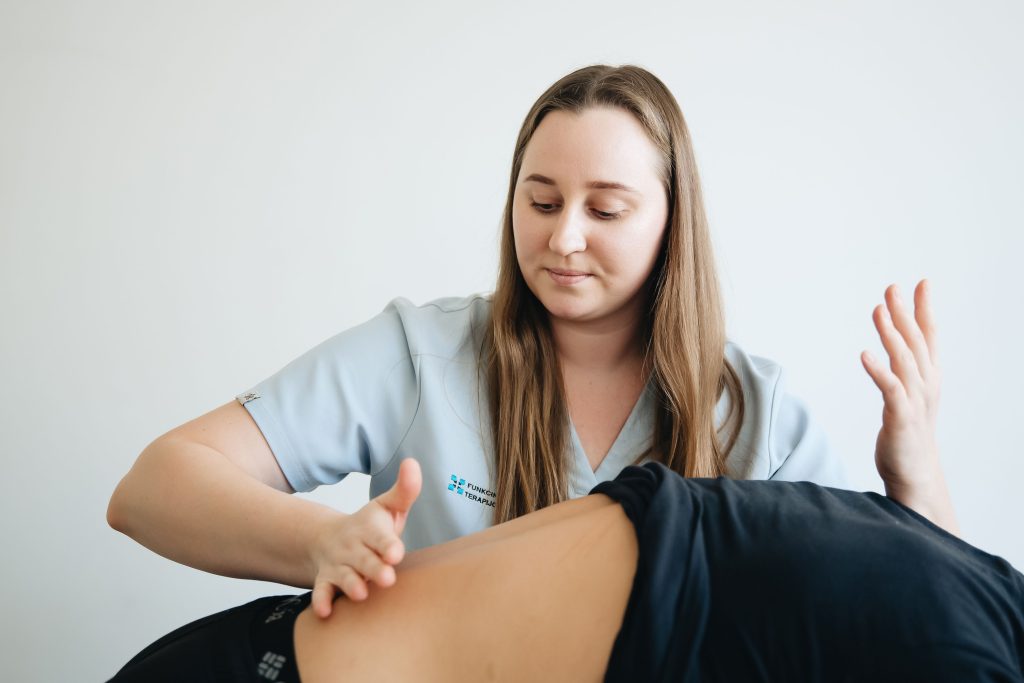
 

rehabilitation exercise physiotherapist

Unlike a standard physiotherapy appointment, which may focus on a recent injury such as a rolled ankle or sore back, NDIS physiotherapy starts with your goals and what you want to be able to do.

Pain still matters, but the focus is on improving function, building independence and supporting your participation in everyday life over the long term.

In practice, this might include:

  • Getting in and out of bed, a chair or a car more safely
  • Reducing falls and building confidence when walking
  • Walking further, whether that’s to the bus stop or along the beachfront
  • Building strength to return to the gym, sport or work
  • Accessing treatment for pain relief
  • Developing strategies to manage pain over the long term

Throughout your treatment, we can also communicate with your support coordinator to discuss your progress, the goals you’re working towards and the plan for achieving them.

Who Can Access NDIS Physiotherapy?

If you’re an NDIS participant with funding available for physiotherapy, you may be able to use it to access treatment. Check your plan and discuss your funding with your support coordinator or plan manager before booking.

You can also review your allocated funding through the NDIS participant portal. Physiotherapy funding may fall under Capacity Building, Improved Daily Living, depending on your plan.

Quay Health is a registered NDIS provider, so we can work with participants who are:

  • Self-managed: You manage your NDIS funding and can generally choose your preferred provider, whether registered or unregistered.
  • Plan-managed: Your plan manager handles payments to providers. You can generally choose registered or unregistered providers, subject to your plan and NDIS rules.
  • NDIA-managed (agency-managed): You must use a registered NDIS provider.

What Happens at Your First Appointment?

Your first session starts with getting to know you, understanding your needs and discussing what you want to achieve through physiotherapy. You can also read more about what to expect at your first physiotherapy appointment.

A conversation about your goals

We’ll review your NDIS plan goals and discuss the activities or everyday tasks you find most challenging.

A physiotherapy assessment

We look at strength, balance, movement and how you get around. We use objective testing with VALD technology so we can track progress properly.

A personalised treatment plan

Together, we’ll decide what to prioritise, how frequently to attend sessions and which exercises or strategies you can practise at home between appointments.

You’re welcome to bring a support worker, family member or carer to your session.

Why Choose Quay Health for NDIS Physiotherapy?

At Quay Health, we focus on consistent, transparent care that supports your individual goals.

One physiotherapist who knows you

Working with a consistent physiotherapist means you won’t need to explain your history and goals from scratch at every visit.

Collaboration with your support team

We can communicate with your support coordinator, occupational therapist and GP, where appropriate, to help keep your care aligned with your goals.

Reports to support plan reviews

Clear, objective progress reports can help demonstrate what you’ve been working on, the progress you’ve made and your ongoing therapy needs.

Objective progress tracking

We use testing to monitor changes in your strength and function, helping you and your physiotherapist understand how your rehabilitation is progressing.

If you’re looking for NDIS physiotherapy in Bondi Junction or Sydney CBD, Quay Health can help you work towards your goals with an individualised approach to rehabilitation.

Frequently Asked Questions

Do I need a GP referral for NDIS physiotherapy?

A GP referral is generally not required to access NDIS-funded physiotherapy. However, if your GP has provided a referral or relevant medical information, bring it to your appointment to help us understand your needs.

How many physiotherapy sessions will my NDIS plan cover?

The number of sessions depends on your available funding, your individual needs and the frequency of treatment. We’ll explain the cost per session upfront so you can plan your budget.

Can my support worker attend physiotherapy sessions?

Yes. You’re welcome to bring your support worker, family member or carer. They may also be able to help you practise recommended exercises and strategies between sessions.

Can Quay Health provide reports for NDIS plan reviews?

Yes. We can provide reports documenting your treatment, progress and ongoing physiotherapy needs to support the plan review process.

Book an NDIS Physiotherapy Appointment

If you or someone you support has NDIS funding and wants to improve their mobility, build confidence or return to everyday activities, Quay Health is here to help.

Call 1300 782 943 or book an appointment through our website to discuss your physiotherapy needs.


Aaron Hubig

Aaron’s journey into remedial massage therapy began after the passing of his father, which inspired him to leave his Master’s in Civil Engineering and pursue a career centred around helping others. He spent several years travelling and studying yoga, breathwork, movement, and bodywork before qualifying as a Remedial Massage Therapist in Australia. Today, he combines these experiences to help people move better, reduce pain, and improve their overall quality of life.
 
His treatment style is hands-on, movement-focused, and evidence-informed. Aaron combines manual therapy with movement assessment, corrective exercise, and breathing techniques to address the underlying causes of pain and support long-term recovery. He believes empowering clients with a better understanding of their bodies is key to achieving lasting results.
Aaron uses a range of techniques including myofascial release, soft tissue therapy, trigger point therapy, PNF stretching, movement assessments, corrective exercises, and breathing techniques.
 
He enjoys treating a wide range of clients, from active individuals and athletes looking to improve performance and prevent injury, to people experiencing chronic pain, postural concerns, or movement limitations.
Outside the clinic, you’ll find Aaron following soccer and American football, playing beach volleyball, staying active outdoors, or enjoying thought-provoking conversations about philosophy and psychology. He also has a soft spot for sports fail compilations.
 
Clinical interests include:
  • Chronic pain
  • Sports injuries
  • Postural dysfunction and movement
  • Stress-related muscular tension
  • Mobility and injury prevention
Languages spoken other than English: German, English, Conversational Spanish and French 
 
Aaron is available at Quay Health. Call 1300 782 943 to make an appointment or book online.

Abigail Jones

Senior Physiotherapist

Abi discovered her passion for physiotherapy after supporting her mum through ACL rehabilitation following a ski accident, and later experiencing the power of quality rehab herself as a competitive swimmer managing a rotator cuff tendinopathy. These experiences inspired her to pursue a career focused on helping people move better and recover with confidence. She began her career as a rotational physiotherapist in the NHS in England, gaining broad experience across multiple specialties before transitioning into private practice with a strong interest in active rehabilitation and long-term functional outcomes.

Her treatment style is hands-on, exercise-focused, and evidence-based. Abi combines manual therapy with progressive, structured rehabilitation programs to achieve meaningful and sustainable results.

Abi uses a range of techniques including joint mobilisations, PNF techniques, dry needling, soft tissue therapy, taping, gym-based rehabilitation, and VALD ForceDecks testing for objective progress tracking.

Outside the clinic, you’ll find Abi sea swimming, running, at the gym, playing tennis, or creating content around rehab and active living.

Clinical interests include:

  • Running and sport-related injuries
  • Chronic low back pain
  • Shoulder rehabilitation, particularly rotator cuff tendinopathies
  • Progressive, structured rehabilitation programs

Languages spoken other than English: Conversational French

Abi is available at Quay Health. Call 1300 782 943 to make an appointment or book online.

Nerissa D'Mello​​

Clinical Lead Physiotherapist
Nerissa’s interest in physiotherapy began after experiencing multiple injuries growing up. Being in and out of clinics sparked her curiosity about how the body heals and inspired her to help others return to what they love. Early hands-on experience with a Scottish rugby club during her masters strengthened her passion for musculoskeletal and orthopaedic rehabilitation.
 
Now the Clinical Lead Physiotherapist at Quay Health, she has a strong interest in helping patients recover without surgical intervention when possible. Her treatment style combines hands-on techniques with exercise prescription, grounded in the latest research to promote lasting recovery.
 
Some of the techniques Nerissa uses are dry needling, VALD ForceDecks and Dynamo for data-driven rehab, taping, and shockwave therapy for stubborn tendon injuries.
 
She enjoys treating a broad range of patients, regardless of age, fitness, or background, and is currently expanding her expertise in women’s health.
 
Patients can expect a thorough, personalised approach focused on understanding their goals, hands-on treatment, and education in a supportive environment.
 
Outside work, you can find Nerissa training for her first full marathon, playing tennis, smiling at your dog, and trying to keep up with all her downloaded podcasts.
 
Clinical interests include:
 
  • Shoulder injuries, including rotator cuff and instability
  • Ankle sprains
  • Tennis and racquet sports injuries
  • Neck and upper back pain
  • Rehab from postoperative hip and knee replacements
  • Women’s health 
 
Languages spoken other than English: Conversational Hindi
 
Nerissa is available at Quay Health. Call 1300 782 943 to make an appointment or book online.

Jamie Belesky

Senior Physiotherapist

Jamie discovered his passion for physiotherapy through his own rehabilitation journey after tearing his ACL as a teenager playing football. Going through that process sparked his appreciation for how effective rehab can restore confidence and performance. He now has over 10 years’ experience working across musculoskeletal and sports physiotherapy in clinics in Wellington, Auckland, and London, including high-performance gym and sporting environments.

His treatment style is evidence-based, hands-on, and exercise-focused. Jamie combines manual therapy with structured rehabilitation programs to achieve long-term results and believes treatment should always be individualised to the person and their goals.

Jamie uses a range of techniques including dry needling, joint mobilisation, sports massage, taping, shockwave therapy, and VALD ForceDecks testing.

Outside the clinic, you’ll find Jamie running, surfing, playing golf, or watching football.

Clinical interests include:

  • Knee and ankle rehabilitation
  • Low back pain
  • Running-related injuries
  • Shoulder pain and instability
  • Tendon injuries

Jamie is available at Quay Health. Call 1300 782 943 to make an appointment or book online.