Plantar fasciitis, also referred to as plantar fasciopathy, is one of the most common causes of heel pain. It can affect both active and sedentary individuals and is estimated to affect around 10% of people during their lifetime. In runners, plantar fascia-related pain accounts for approximately 8% of running injuries.[1]
What Is the Plantar Fascia?
The plantar fascia is a thick band of connective tissue that originates from the underside of the heel bone and extends towards the toes. It helps support the medial longitudinal arch of the foot and plays an important role in absorbing and transferring forces during walking, running and jumping.
The plantar fascia also contributes to the windlass mechanism. As the toes extend during the later stages of walking and running, the plantar fascia becomes tensioned, helping to raise and stabilise the foot’s arch and create a more rigid platform for pushing off.
What Is Plantar Fasciitis?
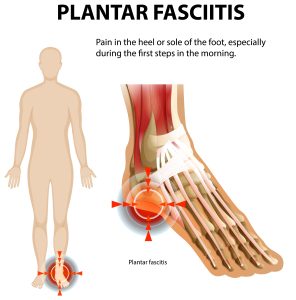
Plantar fasciitis is more accurately described as a degenerative or overload-related condition of the plantar fascia rather than simply an inflammatory condition. Repeated loading can cause changes within the fascia when the demands placed on it exceed its current capacity to tolerate load.[2]
The condition typically presents as localised pain around the underside and inside of the heel, which can sometimes extend into the arch of the foot.
One of the most characteristic symptoms is pain during the first few steps after getting out of bed or following a prolonged period of sitting. This pain often improves as the foot begins moving, but may return following prolonged walking, standing or exercise.
What Causes Plantar Fasciitis?
Similar to tendinopathy, plantar fasciopathy can be understood as a mismatch between the load being placed on the tissue and its current capacity to tolerate that load.
A sudden change in activity is a common trigger. This could include:
- Increasing running distances or frequency.
- Returning to exercise after a period of inactivity.
- Increased standing during work or other occupational activities.
- Changes in footwear that alter how forces are distributed through the foot and plantar fascia.
Other factors that may contribute to increased plantar fascia stress or reduced capacity include foot posture, reduced ankle mobility, body weight and prolonged weight-bearing activity.
However, these factors do not affect everyone in the same way, which is why assessment of the individual is important rather than assuming a single cause.
Research has found associations between plantar fasciopathy and factors such as higher BMI, while evidence for specific foot posture and movement patterns is less consistent.[3]
Heel spurs are also commonly seen on X-rays in people with plantar heel pain. However, the presence of a heel spur does not necessarily mean that it is the cause of the pain, and treatment does not generally need to be directed at removing the spur.
How Is Plantar Fasciitis Diagnosed?
A diagnosis can usually be made through a thorough clinical assessment, including the location and behaviour of the pain, recent changes in activity and examination of the foot and lower limb.
It is important to distinguish plantar fasciopathy from other causes of heel pain. Bone stress injuries, heel fat-pad problems, nerve-related pain and other conditions can produce similar symptoms but require different management.
Ultrasound imaging may demonstrate changes such as thickening of the plantar fascia, although imaging is not always required to make a diagnosis.[4]
How Is Plantar Fasciitis Treated?
There is no single treatment that is appropriate for every person with plantar fasciopathy.
The most effective approach is usually based on the individual’s symptoms, contributing factors, activity levels and goals.
Education and Load Management
Understanding the condition is an important part of treatment.
Temporarily modifying activities that significantly aggravate symptoms can reduce excessive loading while rehabilitation begins.
This does not necessarily mean complete rest. Instead, activity levels can be adjusted according to symptoms, with gradual progression as the capacity of the plantar fascia improves.
Monitoring pain and keeping it low during activity and over the following 24 hours can help guide this progression and reduce repeated flare-ups.
Taping and Footwear
Taping can provide short-term pain relief by supporting the foot and reducing the load experienced by the plantar fascia. It can be particularly useful when returning to walking or exercise while the underlying capacity of the tissue is being improved.
Footwear and, in some cases, orthoses can also be useful. These interventions aim to alter how load is distributed through the foot and may be particularly helpful when an individual’s foot mechanics or footwear are contributing to their symptoms.
Best-practice guidance supports the use of taping and other interventions alongside a broader rehabilitation program rather than relying on them as a standalone treatment.[5]
Stretching and Strengthening
Calf and plantar fascia-specific stretching can be incorporated into rehabilitation, particularly where reduced ankle mobility or calf flexibility may be contributing to symptoms.
High-load strengthening is also an important component of treatment. Progressive calf and intrinsic foot strengthening increases the capacity of the tissues to tolerate load and can improve foot and ankle function.
Rehabilitation should therefore progress from exercises that the individual can currently tolerate towards higher-load strengthening and, where required, running, jumping and sport-specific activities.
What If Symptoms Don’t Improve?
Most cases can be managed conservatively, but some persistent cases may require additional treatment.
Extracorporeal shockwave therapy (ESWT) can be considered as an adjunct to exercise and load management, particularly in longer-standing cases. Recent evidence suggests ESWT can reduce pain and improve function, although treatment protocols vary and the certainty of evidence remains limited.[6]
Corticosteroid injections may provide short-term symptom relief in some people, but their benefits do not consistently persist over the longer term, so they should be considered carefully and are not a substitute for rehabilitation.[7]
Surgery, such as partial plantar fasciotomy, is rarely required and is generally reserved for persistent cases that have not responded to appropriate conservative management.
Individualised Treatment Is Key
Plantar fasciopathy can be influenced by many different factors, meaning treatment needs to be tailored to the individual.
A thorough assessment considers symptom behaviour, activity and occupational demands, recent changes in load, footwear, foot and ankle function and the person’s goals.
The aim is to identify what has increased the stress placed on the plantar fascia, temporarily modify the aggravating factors and progressively rebuild its capacity to tolerate the demands of everyday life and sport.
Conclusion
Plantar fasciitis is a common but often persistent condition that requires more than simply resting until the pain disappears.
Reducing aggravating load can help settle symptoms, but long-term recovery depends on gradually restoring the capacity of the plantar fascia and addressing the factors that may have contributed to its overload.
Because heel pain can have several different causes, an accurate diagnosis is an important first step.
A physiotherapist, podiatrist or osteopath can assess the presentation, identify contributing factors and develop an individualised rehabilitation plan that considers your daily activities, exercise demands and recovery goals.
Early assessment can help prevent persistent symptoms and provide a clearer pathway back to normal activity.
References
- Tseng, W. C., Chen, Y. C., Lee, T. M., & Chen, W. S. (2023). Plantar Fasciitis: An Updated Review. Journal of Medical Ultrasound, 31(4), 268–274. https://doi.org/10.4103/jmu.jmu_2_23
- Shinohara, H., Umezaki, Y., Ikeda, A., Ikeda, T., & Tateyama, N. (2025). Reconsideration of the load-bearing functions of the plantar fascia and intrinsic foot muscles in the windlass mechanism. Scientific Reports, 15(1), 12923. https://doi.org/10.1038/s41598-025-97477-3
- Rathleff, M. S., et al. (2015). High-load strength training improves outcome in patients with plantar fasciitis: A randomized controlled trial with 12-month follow-up. Scandinavian Journal of Medicine & Science in Sports, 25(3), e292–e300.
- Martin, R. L., et al. (2023). Heel pain—plantar fasciitis: Revision 2023. Journal of Orthopaedic & Sports Physical Therapy.
- Morrissey, D., et al. (2021). Management of plantar heel pain: A best practice guide informed by a systematic review, expert clinical reasoning and patient values. British Journal of Sports Medicine.
- Jung, Y., et al. (2023). The Effectiveness of Extracorporeal Shock Wave Therapy for Plantar Fasciitis: A Systematic Review and Meta-analysis.
- Hamstra-Wright, K. L., et al. (2021). Risk Factors for Plantar Fasciitis in Physically Active Individuals: A Systematic Review and Meta-analysis. Sports Health, 13(3), 296–303.
- van Leeuwen, K. D., Rogers, J., Winzenberg, T., & van Middelkoop, M. (2016). Higher body mass index is associated with plantar fasciopathy: Systematic review and meta-analysis of various clinical and imaging risk factors. British Journal of Sports Medicine, 50(16), 972–981.