By Sydney CBD Osteopath Dr Abbey Davidson
 The ankle and foot play an important role in our daily lives and, therefore, pain in these areas is common for many people. The ankle is composed of the end of the lower leg bones (tibia & fibula) and the top of the foot (talus). The foot is made up on 26 bones with over 100 muscles, tendons and ligaments contributing to stability and movement at the region.
The foot and ankle play an important role in balance and absorb shock with locomotion, and due to the consistent use of these areas in our everyday lives, injuries can often take a prolonged time to repair. Trauma, overuse and anatomical differences are some common causes of ankle and foot pain.
What are the common causes of Foot and Ankle Pain?
The common causes of foot and ankle pain include:
- Sesamoiditis
- Hallux Valgus (Bunion)
- Hallux Rigidus
- Turf Toe
- Gout
- Metatarsalgia
- Morton’s Neuroma
- Stress Fracture
- Osteochondrosis Navicular (Kohler Disease)
- Fat Pad Syndrome
- Plantar Fasciitis
- Tarsal Tunnel Syndrome
- Talar Osteophytes
- Ankle Sprain
What are the common structures which contribute to foot and ankle pain?

Pain in the foot and ankle can often be caused by the following structures:
- Bone
- Joint
- Ligament
- Tendon
- Muscle
- Nerve
What can I do to help myself with my foot and ankle pain?
Treatment of ankle and foot complaints will vary depending on the specific cause of your pain. Some general advice includes:
- Rest. Continued use of the foot and/or ankle may prolong inflammation and pain symptoms, and so you should try and allow time for the injured structures to heal. This may involve the use of crutches, bracing and/or the avoidance of sport for a period of time.
- Apply ice. If your foot or ankle pain is due to a recent injury, applying ice to the region for 20 minute intervals within the first 24-48 hours is recommended. This will aim to minimise inflammation at the site of injury and provide some mild pain relief. You should try to avoid direct contact between the skin and ice by placing a towel between the two. After 48 hours consider applying a heat pack to promote blood flow and healing.
- Check your footwear. Often old or inappropriate footwear can result in foot and ankle complaints. Ask your health professional whether your everyday/work/sports footwear is appropriate for you.
In some foot and ankle complaints, strapping or bracing of the region can assist in recovery and return to activity.
When should I seek professional help for my foot and ankle pain?
You should consider booking an appointment with a health practitioner, such as a Chiropractor, Physiotherapist, Osteopath, or Podiatrist if you are experiencing one or more of the following symptoms:
- Signs of deformity
- Prolonged redness or swelling
- Inability to stand, walk or run for standard periods
- Progressively increasing pain intensity
What will a health practitioner do to help with your foot and ankle pain?
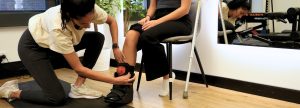
In your initial session, your health practitioner will ask multiple questions about your foot or ankle pain. They will use this information along-side assessment & provocative testing of the foot & ankle region, as well as other asymptomatic areas in the body, to establish a diagnosis for your pain. Time will be taken to explain this to you, how long your expected recovery will be and how your treatment plan will proceed.
Hands-on therapy will involve decreasing muscular tension, increasing joint range of motion and addressing biomechanical issues on the lower limb. To assist with your recovery, you may be given some take-home exercises and stretches which will target not only the foot/ankle, but the weakness and deficiencies in the entire leg. Compliance with these exercises and other advice given in a session will help speed your recovery along.

For more information on conditions of the ankle, foot and lower leg, click on the following conditions: